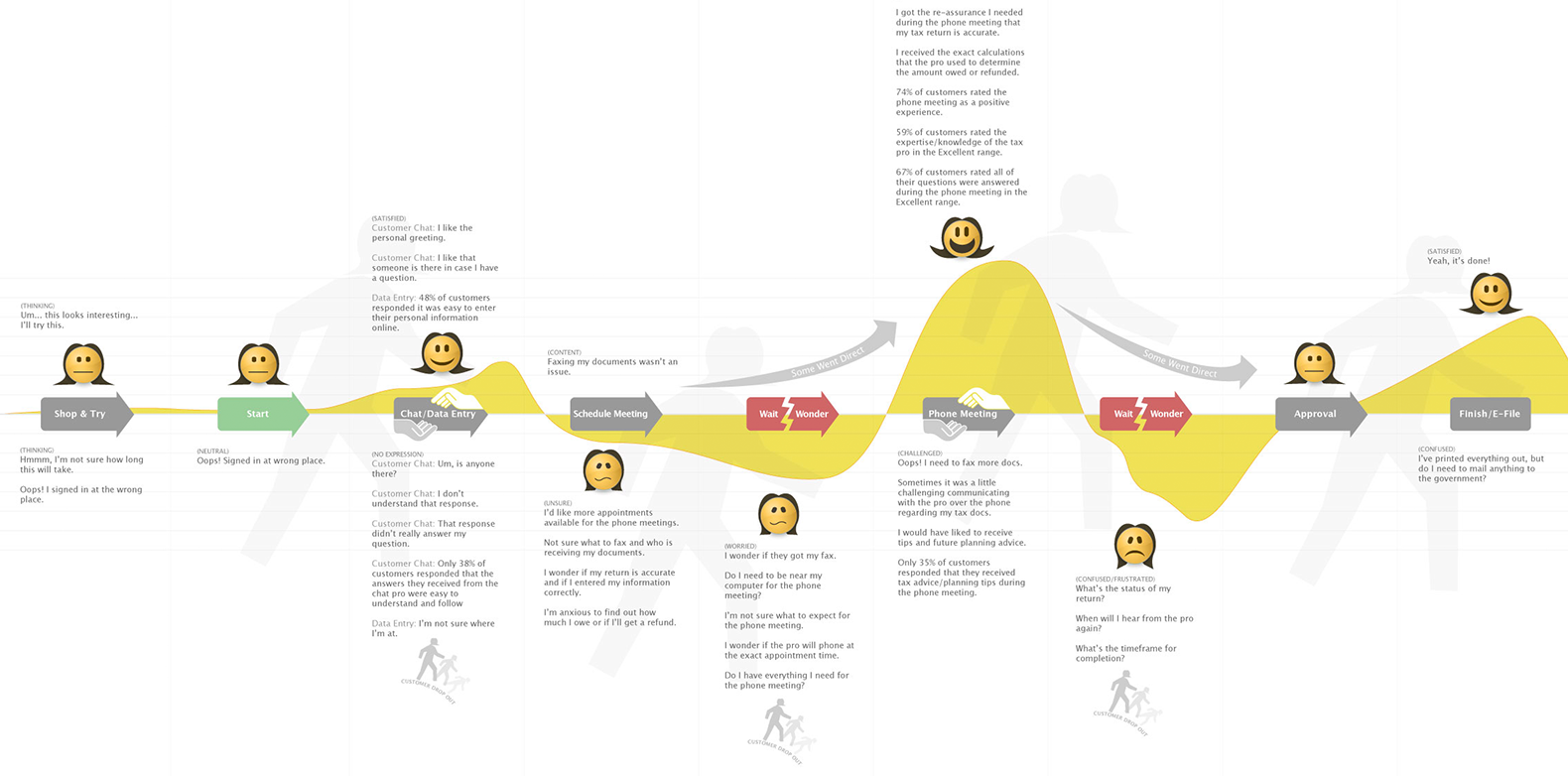

There are four types of customer journey maps, each with a different purpose. Current-state maps show the experience today, day-in-the-life maps show a customer's broader world, future-state maps show the experience you envision, and blueprints add the people and processes that deliver it. Choose the type that fits your business objective.
Journey maps are one of the best tools I've seen for helping companies understand their end-to-end customer experience from the customer perspective. But I've found that many prospective journey mappers embark on this activity without articulating what they want to get out of it — and without fully grasping that there are several variations of journey maps to help them achieve their objectives.
In my CX travels, I've encountered four major types of journey maps. While they look similar on the surface, each has a different focus and business purpose.
Current-State Journey Maps
Current-state journey maps illustrate what your customers do, think, and feel as they interact with your business today. Because these maps highlight existing pain points between you and your customers, they're best suited for driving incremental improvements to your customer experience. They're also the most common type of journey map, and typically look something like the current-state map example (which was created by Craig Goebel) for Intuit's TurboTax Personal Pro service.
Best for: incremental improvements to your current experience.
Day-in-the-Life Journey Maps
Day-in-the-life journey maps also illustrate what people do, think, and feel today. But they take a wider view by examining everything that customers or prospects do (within a specific area of focus), whether that involves your company or not. Because these maps highlight existing pain points in people's lives, they're best suited for driving innovation through addressing unmet needs.
Best for: driving innovation by addressing unmet needs.
Future-State Journey Maps
Future-state journey maps illustrate what your customers will do, think, and feel as they interact with your business at some point in the future. They're best suited for communicating your vision for how new products, services, and experiences will function.
Best for: communicating your vision for new products, services, and experiences.
Journey Blueprints (Service Blueprints)
Often called service blueprints, these diagrams usually start with a simplified version of either an existing or future state journey map. Then they layer on the system of people, processes, policies, and technologies (both customer-facing and behind-the-scenes) that are responsible for delivering that experience today or in the future. If built on a current-state journey map, journey blueprints can help you identify the root causes of existing customer pain points. If built on a future-state journey map, they can help you identify the ecosystem that needs to be in place to support the intended experience.
Best for: finding root causes (current-state) or the ecosystem needed to deliver a future experience.